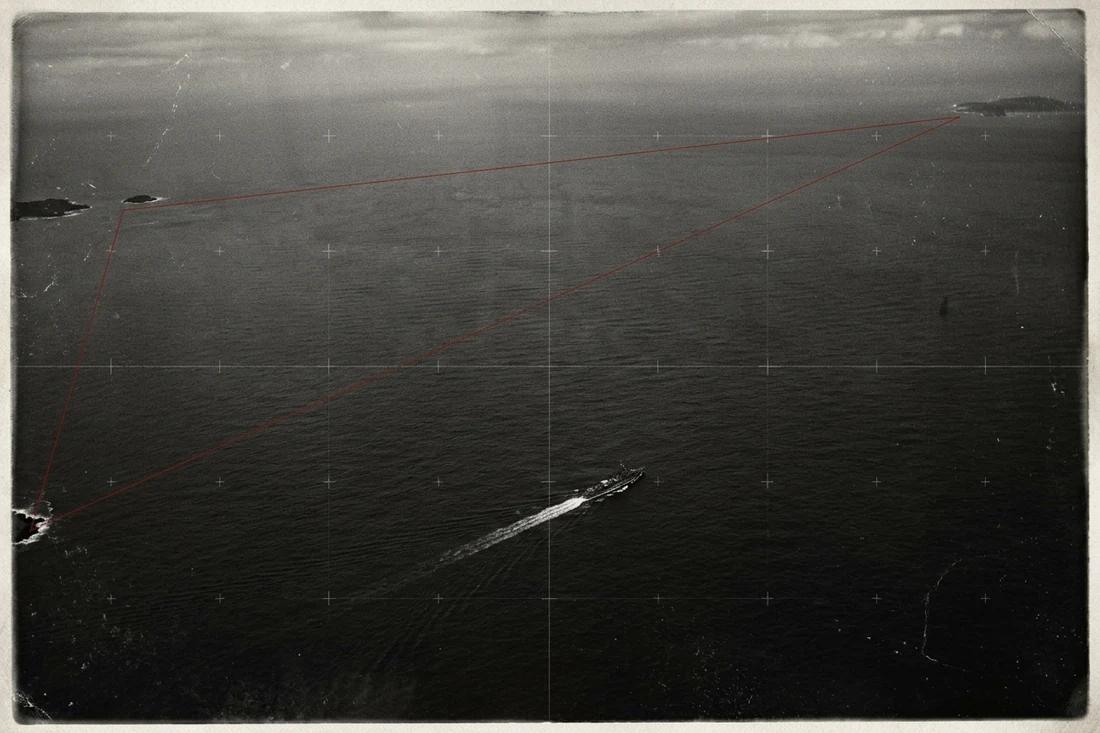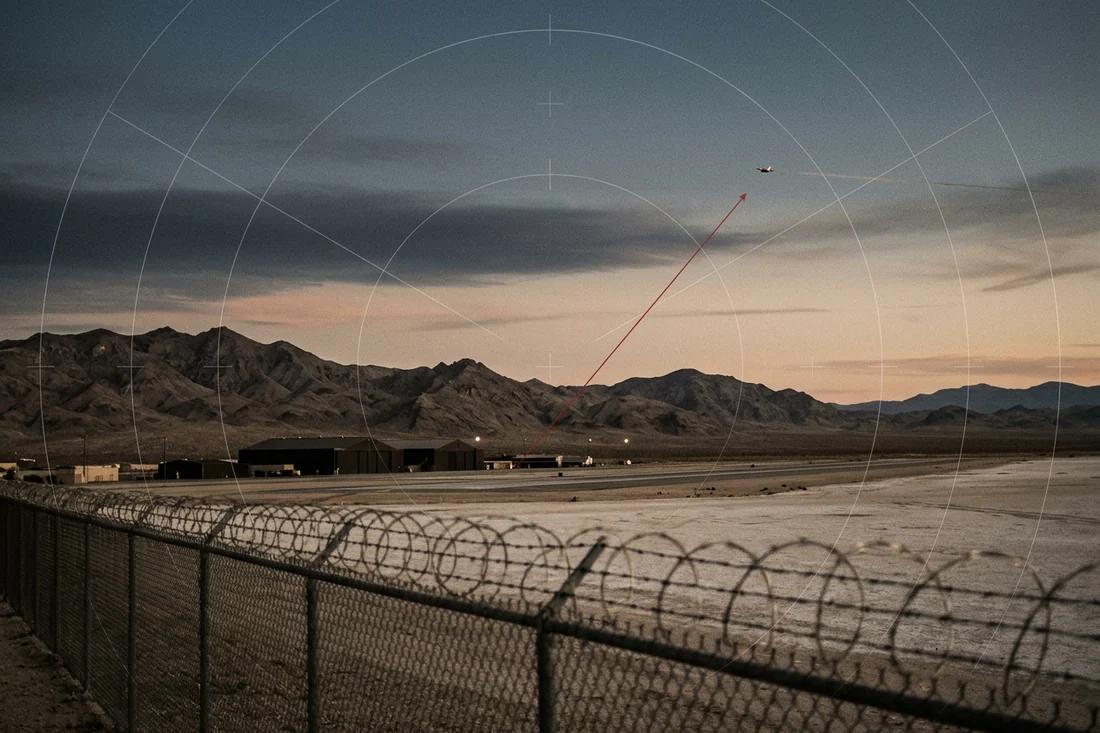
A triangle in the image becomes a triangular vehicle
The claim treats the luminous outline as the exterior of a craft. Several lights with similar triangular shapes seem to reinforce the interpretation: the objects appear to share a design. That would be useful evidence if the image resolved their surfaces. A small distant light, however, can illuminate a patch of the camera’s optics without providing a resolved view of the thing carrying it.
The same outline can travel through the same camera
The Navy’s technical account compared recordings made years apart through night-vision goggles and a single-lens reflex camera. In the later encounter, other equipment also observed unmanned aerial systems nearby. The account associated the recorded triangles with those systems and attributed their triangular appearance to the optical recording chain. This identifies an image-formation effect, rather than measuring a triangular airframe.
Photographic bokeh supplies the relevant mechanism. When a point source is out of focus, its light spreads into an image whose shape can reflect the aperture. Nikon describes the effect of diaphragm shape on out-of-focus highlights. Repeating the shape across several lights can therefore be evidence that they passed through the same optics.
That possibility creates a practical test. Change focus while watching the lights. Compare other small lights in the frame. If outlines contract, enlarge or acquire the same polygonal border together, an optical explanation makes a prediction about the whole image. A true outline should also retain resolved structural detail when the subject is brought into focus.
How large can the blur become?
The instrument uses a single ideal thin lens to isolate defocus. It places the light effectively at infinity and focuses the camera on a nearer distance. These are adjustable optical conditions, not recovered specifications for the Navy recording. They answer whether an unresolved light can occupy a conspicuous area even without a large luminous body.
For focal length f, focus distance s and aperture number N, the distant-light blur width is f² divided by N × (s − f), with f and s in the same units. The result follows from the thin-lens equation and similar triangles through the aperture. Dividing the blur width by pixel pitch tells us how many pixels it covers.
With the opening 50 mm lens, focus at 5 metres, aperture f/2 and 5 micrometre pixels, the blur spans about 0.253 mm: approximately 50.5 pixels. Moving focus to 50 metres reduces the calculated span to about 5 pixels. Increasing the aperture number also shrinks geometric blur. A wider image footprint has appeared without any increase in the physical size of the distant source.
How many pixels can defocus occupy?
An ideal lens observes an effectively infinite-distance point light while focused nearby. All four settings are illustrative and adjustable.
A distant point source can occupy this many pixels across under the selected focus conditions.
This is an optical image width, not the size of the distant object.
Working tape
- Focus distance in millimetres
5 × 1,000 = 5,000 - Focus distance minus focal length
5,000 − 50 = 4,950 - Squared focal length
50 ^ 2 = 2,500 - Aperture × focus gap
2 × 4,950 = 9,900 - Geometric blur width
2,500 ÷ 9,900 = 0.252525 - Pixel pitch in millimetres
5 ÷ 1,000 = 0.005 - Pixels across the blur
0.252525 ÷ 0.005 = 50.505051
The outline belongs to the light path until resolved
The illustrative 50 mm lens, focused at 5 metres and set to f/2, spreads a distant point light across about 50.5 pixels. A shaped aperture can give that spread a polygonal outline. Those pixels measure the image formed by the optics; their width and corners need not describe the light’s physical source.
The compared Navy observations associated the triangles with unmanned aerial systems and their appearance with the recording optics. A focused image with resolved structure would supply the missing evidence for an airframe’s shape. Enlarging an unfocused light preserves a larger view of the blur.
Why people believe it
Triangular craft are a long-running theme. Large black triangles were reported over Belgium in 1989 and 1990, and the shape appears in later sightings and in popular culture. When night-vision footage from US Navy ships showed small triangles of light in 2019, viewers took the shape as a hull. The technical account presented to a House Intelligence subcommittee on 17 May 2022 showed the opposite: a bright point seen through night-vision optics, out of focus, takes the shape of the lens aperture. A triangular iris or a blocking element makes every such point a triangle, whatever it is.
Where to test it
The blur circle follows the thin-lens relationship between aperture, focal length and focus distance, which the calculator evaluates. The same arithmetic explains why distant street lamps become soft discs in a photograph taken with the lens focused on a nearby object.